Your First Test Match: Follow the Session, Not Every Ball
Follow a first Test match by session, not every delivery, and notice how the pitch, pressure and field change without losing the thread of play.
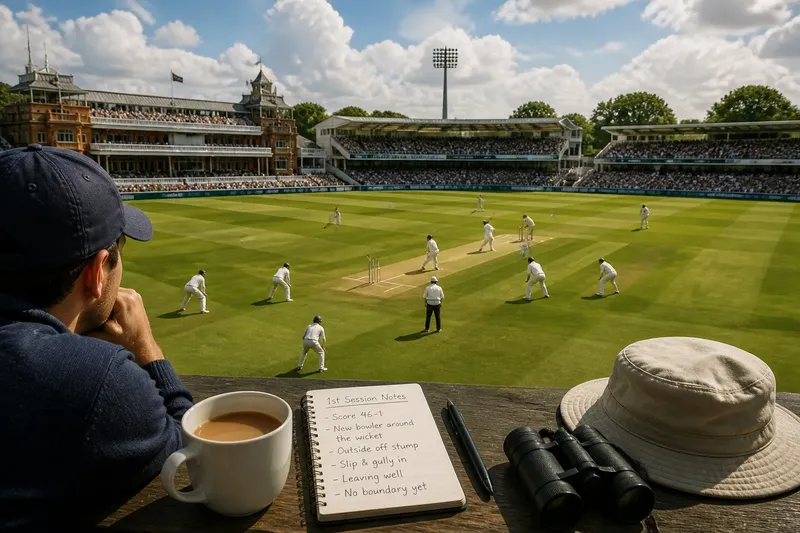
You settle in with a cup of tea, glance at the score, and hear the commentator describe a field change before you’ve learned the batter’s name. For a first Test match, follow the session rather than trying to decode every ball. A session gives you a manageable stretch of play and a simple question to carry: what is changing?
Test cricket unfolds across several days, so the score at any moment is only part of the story. A batter may be building an innings, a bowler may be probing for a weakness, or a captain may be protecting runs. You do not need to catch every delivery to see those patterns take shape.
What is a session, and when should you tune in?
A session is one of the scheduled blocks of play in a day, separated by breaks. The precise timetable can vary by match and local conditions, so the broadcaster’s schedule or the ground’s match information is the easiest place to check it.
Before play, choose one session to watch. A morning session is often a natural starting point: the teams are fresh, the day’s plan begins to show, and you can watch how the batters and bowlers settle in. If your day is busy, tune in for the session that fits your schedule. There is no need to treat a Test as an appointment you must attend from the first ball to the last.
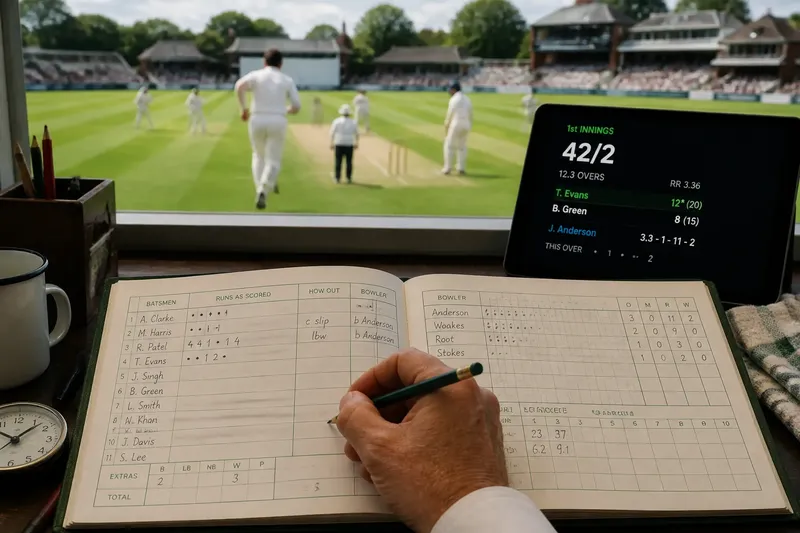
At the start, note three things: the score and wickets down, who is batting, and who is bowling. You can find these on the broadcast score graphic or a live scorecard. Then let the play run. Check back at the break to see what changed, rather than refreshing the score after every delivery.
What should you notice during the first part?
Watch the relationship between the pitch, the ball and the batter’s choices. The pitch is the strip where the ball bounces; its behavior can affect how confidently a batter plays forward, goes back, or leaves a delivery alone. You do not need to identify every technical detail. Notice whether the batter seems comfortable with the bounce and pace.
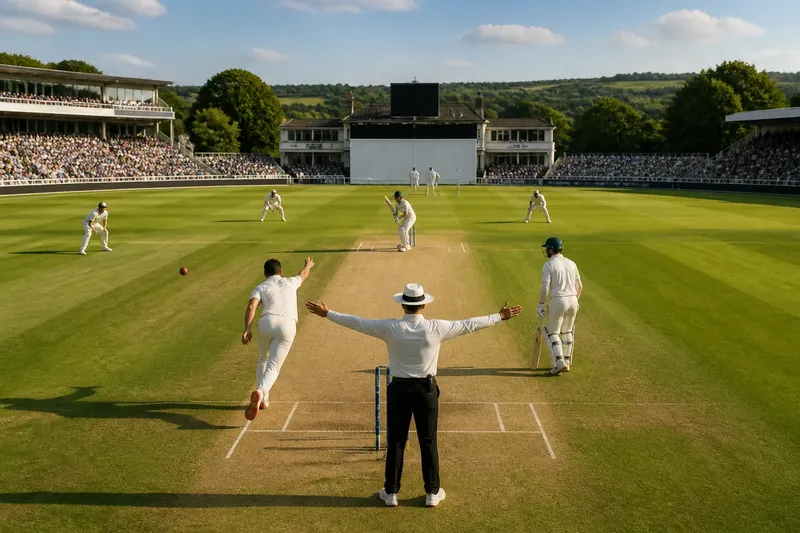
Follow the bowler’s broad plan, too. Are deliveries aimed at the stumps, where a batter must defend the wicket, or directed toward the edge of the bat? Does the bowler vary pace or angle? A field with several close catchers can suggest that the bowling side is looking for a mistake near the bat. A deeper fielder may be there to stop a shot reaching the boundary.
Imagine you tune in with the batting side at a modest score and one wicket down. A new bowler begins with a close fielder beside the batter, then sends several balls outside the off stump. If the batter keeps leaving them, you can watch whether the bowler changes line or the captain moves a fielder. The point is not to predict a wicket; it is to notice how each side responds.
How does the session’s story change?
As play continues, look for changes in risk. A batter who began by defending may start taking singles or driving balls into gaps. A bowler who has been accurate may try a different angle or bring a catcher closer. The captain can adjust the field to match the batter’s scoring areas, the bowler’s plan, and the match situation.
Keep the score in view, but treat it as context rather than a verdict. A steady run rate with few wickets lost can indicate patient batting; a sudden cluster of wickets can shift the pressure quickly. In a Test, the value of a run depends partly on what has already happened and how much play remains. If you hear terms like “lead” or “trail,” compare the teams’ innings totals: the side with the higher combined score is ahead by the difference.
One useful habit is to compare the start and end of your chosen session. Ask who scored, which wickets fell, and whether the bowlers or batters changed their approach. A few notes on your phone are enough: “new batter defended,” “spinner came on,” or “field moved deep.” These short observations make the next time you tune in easier to follow.
What questions help you follow a Test session?
Do I need to understand every dismissal?
No. Notice who was out and whether the dismissal followed a catch, a bowled delivery, or a run-out, then use the replay or commentary for the detail. The match remains understandable even if one decision passes you by.
Why does the captain keep moving fielders?
Fielders move to support a bowling plan or cover an area where the batter is scoring. Watch for a change after a boundary, a new bowler, or a shift in the batter’s approach, then see whether the next few shots go elsewhere.
Should I follow the scorecard or the broadcast?
Use whichever makes the play clearer. A scorecard helps you track batters, bowlers and wickets at a glance, while the broadcast can explain why the field or bowling changes; you can switch between them at a break.
What if I miss a session?
Check the scorecard and a short match update before tuning in again. Start with the current innings, wickets down and the latest partnership, then follow the next passage of play without trying to reconstruct every delivery you missed.
How should you use the break?
At the interval, take a moment to reset rather than chase a full recap. Look at the score, wickets lost, current batters and bowling figures. Commentary or a broadcaster’s match summary can fill in the major turning points, but you can skip ball-by-ball updates.
Then choose one question for the next session: can the batter handle the new bowler, will the captain bring a catcher in, or will the batting side push the score along? A single question gives your attention somewhere to land without turning the match into homework.
When is it fine to stop watching?
Stop when your chosen session ends, or earlier if you have other plans. Test matches are designed to continue beyond any one viewer’s attention, and the next session will offer a fresh place to rejoin. If a big moment catches your interest, stay; if not, read a brief update later.
That is the useful rhythm of a first Test match: arrive with the score and the people at the crease, watch for a broad change in tactics, and leave with a sense of what the next session might bring. Follow a first Test match this way and the long game becomes easier to enjoy, one clear stretch of play at a time.